Part Statuses
| Platform: | AvailableWebAvailableMobile |
|---|---|
| Plan Type: | Not availableBasicNot availableEssentialAvailablePremiumAvailableEnterprise |
| User Type: | Not availableRequesterAvailableFull UserAvailableAdministrator |
This article explains what part statuses are, how they appear across work orders and part details, and how to manage part status settings.
About Part Statuses
Part statuses enable a standardized inventory workflow that helps teams determine whether a work order is ready to execute. By providing visibility into each part’s lifecycle, teams can reduce wasted trips, delays, and rescheduling.
Standardized Parts Status Workflow
The part status workflow is a standardized lifecycle that helps technicians and planners see whether a job is parts-ready. Teams update part statuses in the work order as parts are prepared and issued for the job, helping prevent delays and blocked work.
Status Definitions
- Assigned: Required parts are identified and added to the work order.
- Reserved: Parts are committed to the work order and removed from available quantities.
- Kitted: Parts are picked and grouped for the job.
- Staged: Parts are placed in a pickup or staging area for the technician.
- Issued: The technician has received the parts and can execute the work order.
Calculating Committed Stock
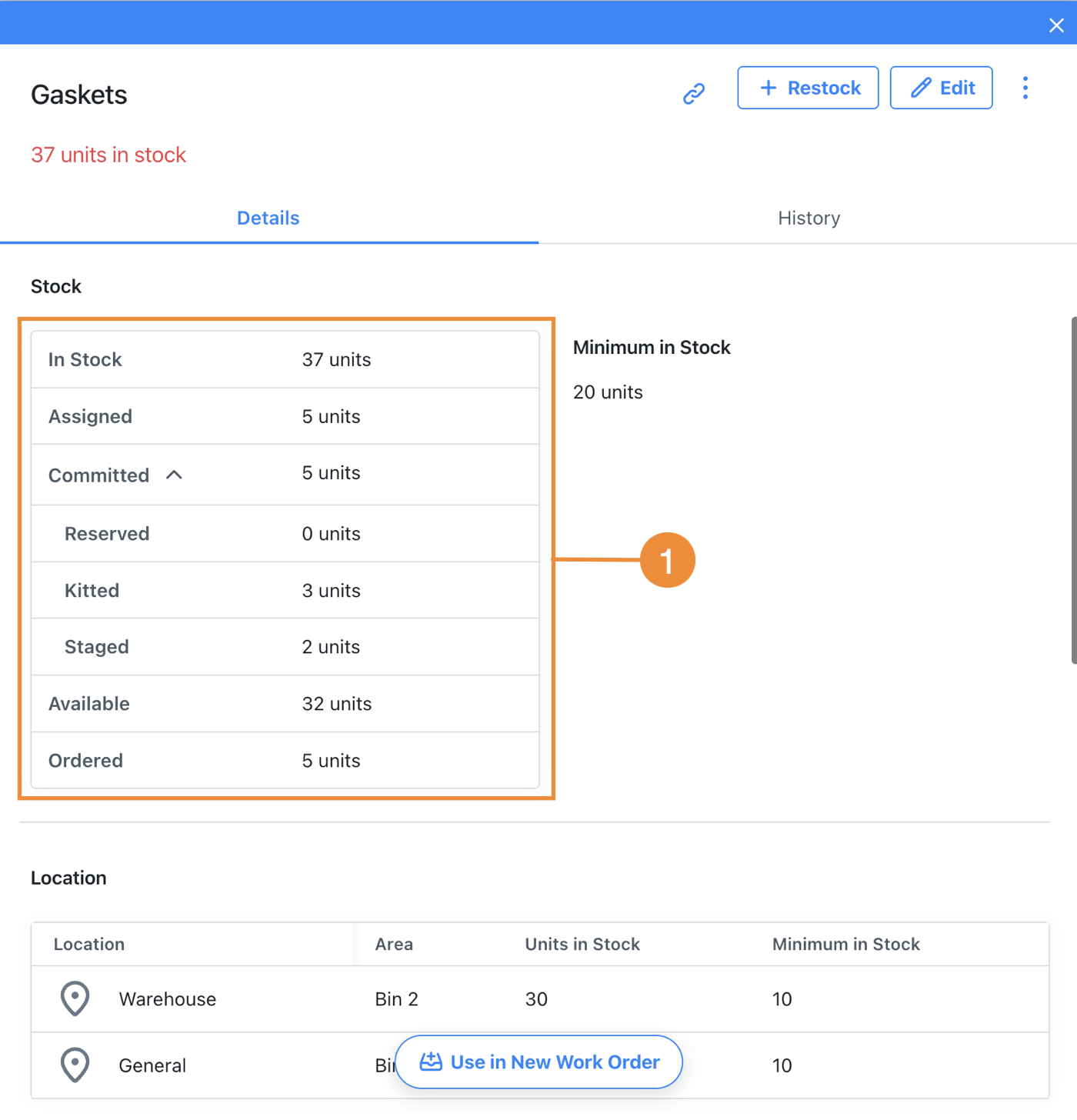
Committed stock represents inventory that's been set aside for active work. Committed stock includes parts in the following statuses:
- Reserved
- Kitted
- Staged
Parts that are Assigned aren't included in committed stock. This prevents work orders scheduled in advance from inflating reserved quantities or distorting inventory availability. Separating Assigned from Reserved ensures that parts are only considered committed when they are actively reserved for a work order.
To automate this process, you can configure the Assigned Quantity Window and Auto Reserve Window in Parts Inventory Settings. These settings determine when parts are automatically marked as Assigned or Reserved based on how close a work order is to its start or due date. For details, see Update Part Status Settings.
Calculating Available Quantities
Available quantities are the number of units you have in stock, minus any units committed to upcoming work orders.
Available quantity is calculated as:
Available = In Stock - Committed Stock
Issued Parts and Inventory Adjustments
Parts can be issued before a work order is marked as complete, ensuring that in-stock quantity accurately reflects parts that have already been used or distributed.
Inventory is reduced when parts are issued, either by updating the part status to Issued or by closing a work order. Closing a work order automatically marks any remaining parts as Issued and deducts them from in-stock quantities.
If a part is removed from a work order, it's marked as Available and its in-stock quantities are increased. This makes sure inventory levels are accurate and aligned with what's being used on the job.
Part Statuses in Work Orders
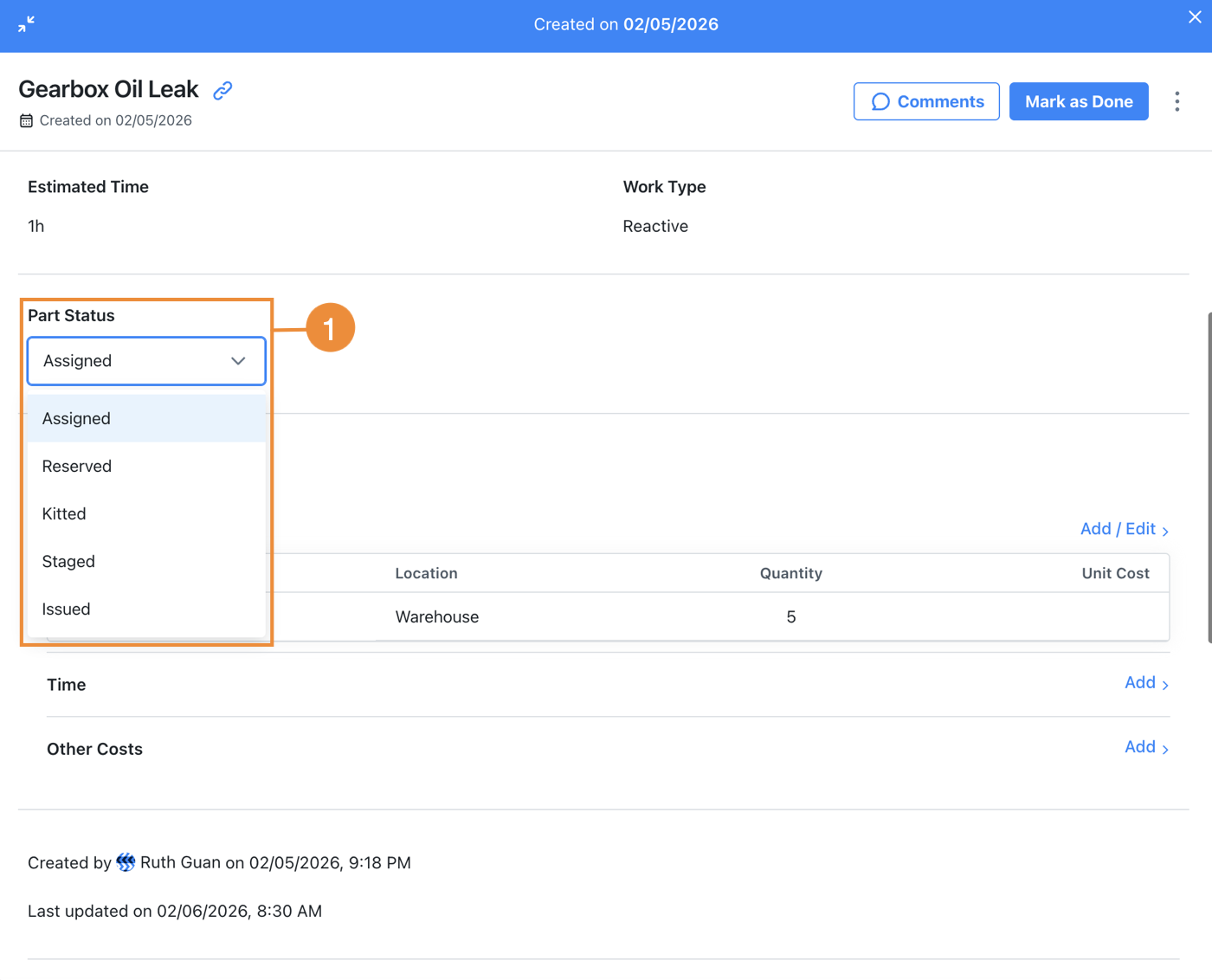
Work orders include a Part Status field. The part status you set at the work order level applies to all parts associated with the work order.
| Status | What this means | How this status is set | What changes in inventory |
|---|---|---|---|
| Assigned | Parts needed for the work have been identified and added to a work order. | Set automatically when part(s) are added to a work order, or when the assigned quantity window is triggered because the work order is nearing its start or due date. | No change to Available or In Stock quantities. |
| Reserved | Parts are now committed to the work order and shouldn’t be used elsewhere. | Set manually by a parts clerk or planner, or automatically when the auto reserve window is triggered because the work order is nearing its start date or due date. | Parts are committed and Available quantities are reduced. In Stock quantity remains the same. |
| Kitted | Parts are physically picked and grouped together to complete the work. | Set manually by a parts clerk or planner in the part status dropdown 1. | Parts remain committed. In Stock quantity remains the same. |
| Staged | Parts are placed in staging or pickup area for the technician and the job is now parts-ready. | Set manually by a parts clerk or planner in the part status dropdown 1. | Parts remain committed. In Stock quantity remains the same. |
| Issued | Technician has the parts on hand and is ready to execute the work. | Set manually by a technician or parts clerk, or automatically when the work order is marked as done. | Parts are consumed and In Stock quantity is reduced. |
Part Statuses in Part Details
In Part Details, you can view the number of units in each part status 1 to quickly see how inventory is allocated.
Update Part Status Settings
In your organization’s Settings, go to Feature and find Parts Inventory.
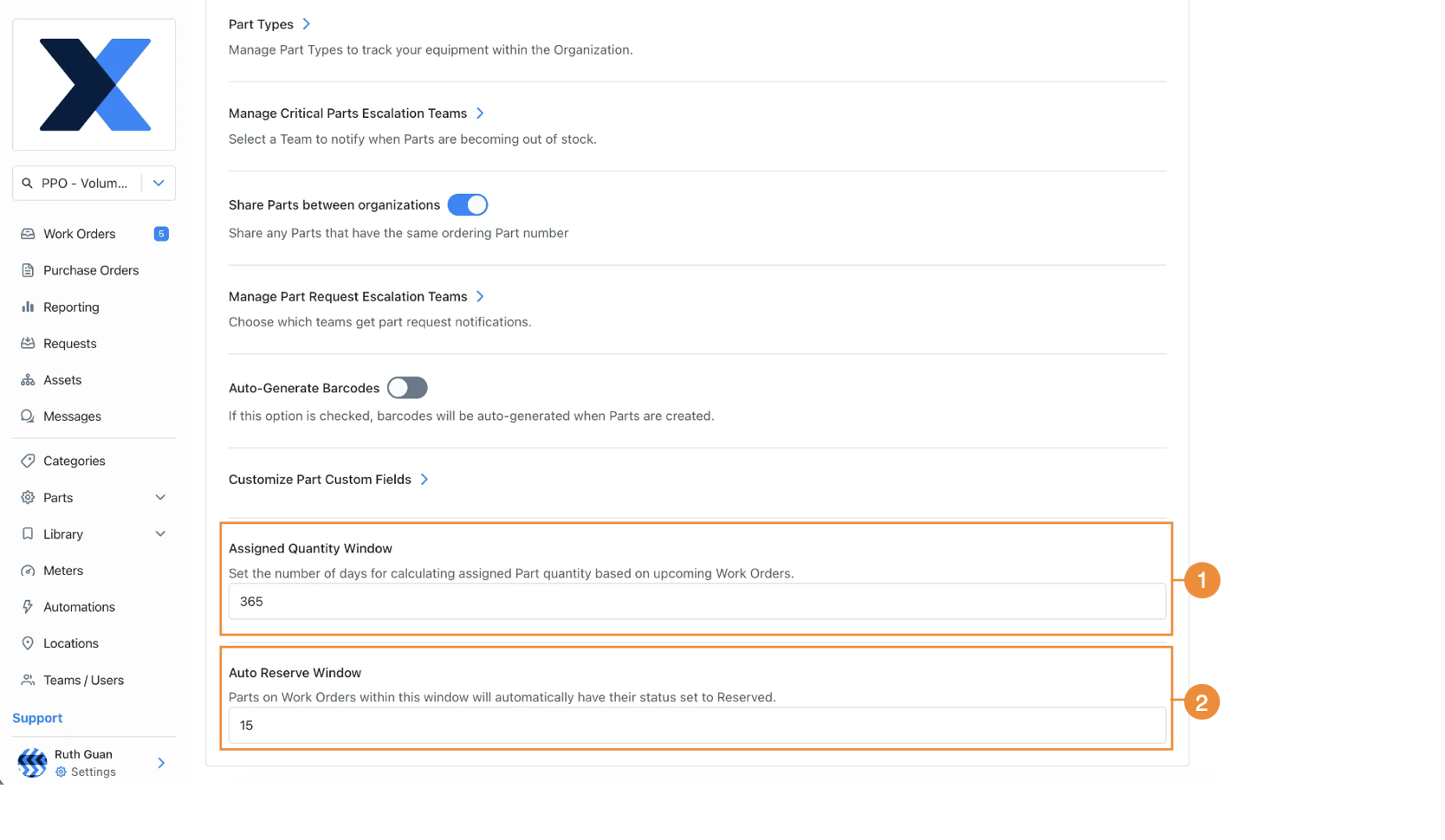
Assigned Quantity Window 1:
When set, parts needed for upcoming work orders are marked as Assigned based on the selected time window.
For example, with a 30-day lookahead, parts are marked as Assigned 30 days before the work order starts.
Auto Reserve Window 2:
When set, parts needed for upcoming work orders are marked as Reserved based on the selected time window. This prevents inventory from being used elsewhere.
For example, with a 15-day lookahead, parts are marked as Reserved 15 days before the work order starts.